
 Get in touch




Energy Poverty Nexus
Supporting Member States to Combat Energy Poverty
Energy Poverty Nexus is a European project aiming to empower EU Member States in tackling the urgent challenge of energy poverty.
By strengthening national capacities, aligning policies with EU legislation, and establishing a sustainable framework for monitoring and alleviation, the project takes a comprehensive approach to reducing energy poverty across Europe.
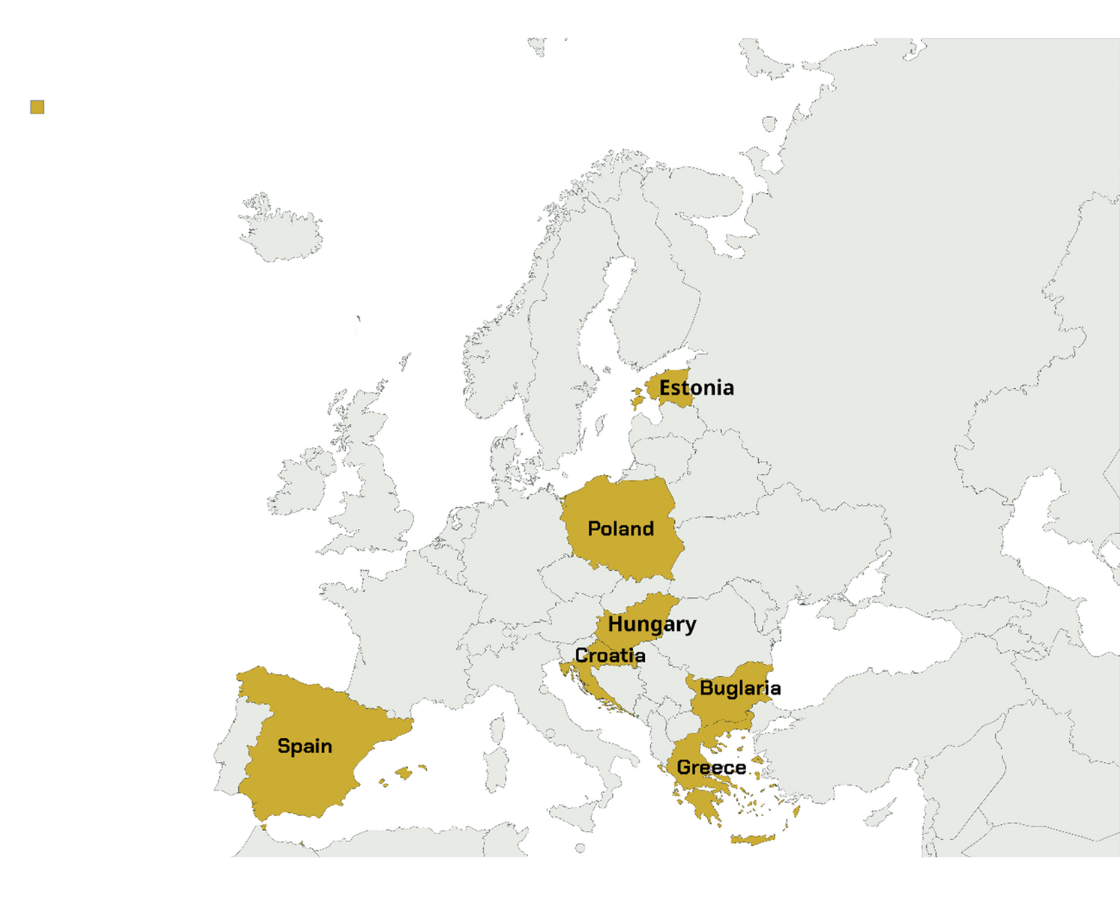
The project focuses on the establishment of national energy poverty observatories in seven pilot countries, Bulgaria, Croatia, Estonia, Greece, Hungary, Poland, and Spain, while extending its impact to three additional replication countries. By supporting the implementation of the EU’s Fit for 55 package, Energy Poverty Nexus will accelerate national efforts and ensure coordinated, long-term action.
Mission
At the heart of the initiative is the creation, support and sustainability of national energy poverty observatories/ networks of experts in the seven pilot countries. These observatories will:
- Collect and analyse national and regional data on energy poverty;
- Monitor key indicators and develop data-driven policy insights;
- Foster collaboration among national and subnational authorities, researchers, and social stakeholders;
- Support the co-design of energy poverty alleviation schemes that truly meet the needs of vulnerable households.
Each observatory will act as a hub for policy learning, ensuring that actions are grounded in local realities but consistent with EU frameworks on climate and energy justice.
Activities
Capacity building and knowledge sharing
Beyond data and governance, capacity building and knowledge sharing are central to the project. Through training seminars, workshops, webinars, and peer-to-peer exchanges, policymakers and stakeholders will gain the tools, expertise, and networks needed to effectively combat energy poverty, not only in the pilot countries but across Europe.
In detail the project will organise:
- Peer-learning exchanges with at least three organisations outside of the pilot countries to examine the replication potential in 3 more countries;
- National capacity-building workshops in each pilot country that will bring together national authorities, civil society organisations, energy agencies, and social actors to strengthen their ability to design and implement energy poverty measures tailored to local contexts;
- EU-level events and webinars to share lessons learned and research findings to a broader European audience and encourage replication of good practices.
Policy uptake
Energy Poverty Nexus will also directly support national authorities in fulfilling their obligation to empower and protect energy-poor households. By working hand-in-hand with national authorities in the pilot countries, the project will ensure that efforts to tackle energy poverty are fully embedded in long-term energy and social strategies.
Through targeted policy support, the project will:
- Analyse and compare national policies with the latest EU energy and climate legislation to identify gaps and opportunities for action;
- Evaluate existing support schemes and measures in EU and national level addressing vulnerable consumers, assessing their effectiveness and inclusiveness;
- Co-design practical improvements to national programmes of pilot countries, such as renovation funds, social energy tariffs, and targeted efficiency measures;
- Help develop Energy Poverty Action Plans in each pilot country, outlining concrete actions, timelines, funding sources, and impact goals up to 2040;
- Produce concise policy briefs and recommendations for Member States to integrate energy-poverty objectives into National Energy and Climate Plans and Social Climate Plans;
- Organise national policy dialogues and stakeholder roundtables to foster collaboration between ministries, regulators, local governments, and social organisations.
By combining policy alignment, governance innovation, and capacity building, Energy Poverty Nexus is not only addressing today’s challenges – it is laying the foundation for a fairer, healthier, and more sustainable energy future across Europe.
Project details
Project funding period: September 2025 – August 2028
Acknowledgements: Energy Poverty Nexus is co-funded by the European Union’s Programme for Environment and Climate Action (LIFE) under Grant Agreement No. 101215621.
Publications
Policy brief
The EU Energy Poverty Framework: Understanding the Provisions and how Member States can Implement these Coherently
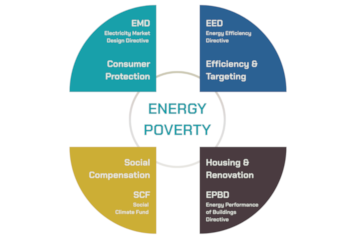
This policy brief provides national policymakers and implementing authorities with a concise guide to the EU’s provisions on energy poverty and how these requirements interact across legislation. The brief focuses on the provisions relevant to energy poverty within the recast Energy Efficiency Directive, the recast Energy Performance of Buildings Directive, the Social Climate Fund regulation and the Electricity Market Design reform.
Author: Lorenzo Sapochetti, Regulatory Assistance Project (RAP)
Publication date: December 2025
 Access the policy brief in English
 Partners
Climate Alliance
Project Coordinator | European level
For over 35 years, Climate Alliance member municipalities have been acting in partnership with indigenous rainforest peoples for the benefit of the global climate. With over 2,000 members spread across more than 25 countries, Climate Alliance is Europe’s largest city network dedicated to comprehensive and equitable climate action.
INZEB
Greece
Since 2017, INZEB plays a vital role in shaping a just and inclusive energy transition by connecting climate and energy policies with the lived realities of citizens. INZEB addresses urgent challenges such as energy poverty, the decarbonisation of the built environment, and the broader fight against climate change.
CEESEN
European level
The Central and Eastern European Sustainable Energy Network is the only umbrella organisation representing green transition actors in CEE. We serve as a low-carbon economy knowledge base and network, a voice for the region at the EU level, and a platform that connects public administrators, policymakers, and other key actors working toward low-carbon economies in the CEE.
DAFNI
Greece
DAFNI – the Network of Sustainable Greek Islands – is a Development Organization of Local Government (DOLG) representing island municipalities. Founded in 2006, its mission is to strengthen local governance in the islands and promote a sustainable development model tailored to island regions.

DOOR
Croatia
DOOR (Society for Sustainable Development Design) is a civil society organization founded in 2003. DOOR’s mission is the promotion of sustainable development principles in all segments of society, at the local, regional and national levels, primarily in the field of energy.
ECOSERVEIS
Spain
ECOSERVEIS is a non-profit organisation providing strategic innovation consultancy and specialising in energy. Since 1992, Ecoserveis has been working to bring energy closer to society by promoting a fair and sustainable energy model.
EnEffect
Bulgaria
The Centre for Energy Efficiency is a non-profit, non-governmental organisation founded in 1992 in Sofia (BG), to address the urgent need for energy savings across all sectors of society. For over 30 years, EnEffect has been leading national and international initiatives, supporting Bulgarian authorities and the private sector in achieving sustainable energy development.
Habitat for Humanity Hungary
Hungary
Habitat for Humanity works in 70 countries around the world to ensure that everyone can live in a healthy, affordable, decent home. Various types of housing poverty affect around 3 million people in Hungary. Solving such a large-scale problem requires widespread cooperation and more effective housing policy.
KAPE
Poland
The National Energy Conservation Agency S.A. (KAPE) is a consulting company in Poland, active in the field of energy efficiency management and has been in business since 1994. The primary territorial area of KAPE’s operations is the Polish market, by supporting companies and Local Governments Units in the field of energy efficiency and renewable energy sources (RES).
Metropolitan Research Institute
Hungary
The Metropolitan Research Institute (MRI) is an internationally and nationally recognized scientific think-tank, founded in 1989 and based in Budapest. Its work is dedicated to housing, social problems and urban development.
Regulatory Assistance Project
European level
The Regulatory Assistance Project (RAP)® is an independent, global NGO with a mission of advancing policy innovation and thought leadership within the energy community. We work toward a clean, reliable, equitable and cost-efficient energy future.
University of Tartu
Estonia
The University of Tartu is the oldest and largest higher education institution in Estonia. Established in 1632, it has been the center of Estonian academic life for almost four centuries. It is among 1% of the world’s most cited universities and research institutions in 15 fields of research.
Want to learn more? Get in touch!
 Follow us on LinkedIn
Dimitra Drakaki
T. +32 2 400 1059
E. d.drakaki@climatealliance.org