 Get in touch





Sofia, Bulgaria
Accelerating the Energy Transition in Sofia
Sofia at a glance
📍 Location: Sofia, Bulgaria
👥 Population: 1.3 million
🏙️ Metropolitan area: Sofia city, 3 towns and 34 surrounding villages
💶 GDP: €40+ billion (2023)
⚡ Existing Energy Communities in Bulgaria: 4
☀️ Existing installed capacity: 750+ kWp
.
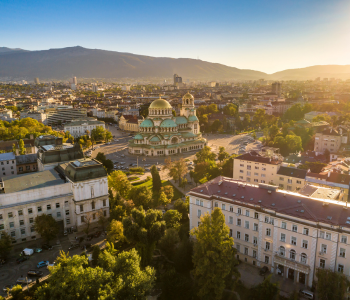
Sofia is the capital and largest city of Bulgaria and the country’s main economic and administrative centre. Sofia Municipality comprises the city itself, three other towns and 34 surrounding villages. With a population of around 1.3 million, Sofia is an important centre for Bulgaria’s economic and energy transition.
The Sofia ECOss Hub builds on two existing local support structures: the Energy Poverty Office, established through the EU-funded POWERPOOR project, and the Technical Assistance Office (TAO) developed through the LIFE-BECKON project.
The Energy Poverty Office provides local one-stop-shop support to vulnerable households to help them reduce their energy costs. The TAO represents a further step towards supporting municipalities, citizens and other local actors in developing Energy Communities.
Building on these experiences, the Sofia ECOss Hub will provide accessible support services for citizens, associations and SMEs and strengthen support for existing and emerging Energy Communities.
Local Energy Context
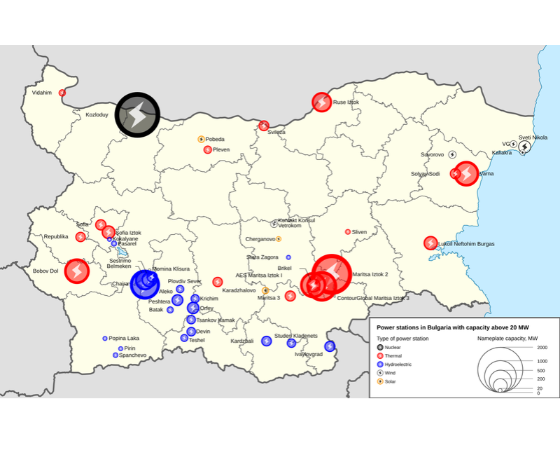
Bulgaria’s electricity system is undergoing a major transformation. In 2025, Bulgaria’s total electricity production consisted of:
0
0
0
Together, nuclear power and renewables accounted for more than 65% of Bulgaria’s domestic electricity production.
At the same time, Bulgaria has experienced a rapid expansion of battery energy storage. In less than two years, operational and planned battery capacity increased from 1.66 GW to 5.7 GW, driven by significant public and private investment.
However, this rapid energy transition has not yet translated into a comparable development of Energy Communities. Large-scale investments are predominantly driven by commercial and utility-scale actors, while citizen-led and locally organised energy initiatives remain at an early stage.
Energy Communities in Bulgaria
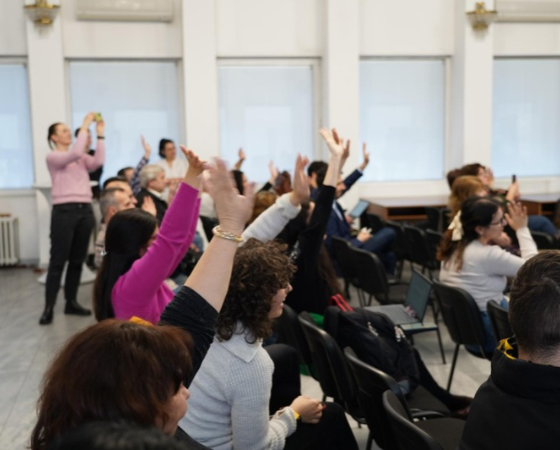
Energy Communities are still a relatively new concept in Bulgaria. The country incorporated the EU Renewable Energy Directive (RED II) and Internal Electricity Market Directive into national law in 2023, establishing the legal basis for Renewable Energy Communities and Citizen Energy Communities.
Recent legislative reforms have also simplified self-consumption for rooftop solar PV, facilitated renewable energy planning and eased grid connections for certain smaller producers.
However, important barriers to the practical development of Energy Communities remain.
Key Challenges for Energy Communities

Lack of a clear legal framework
The implementation of European rules on renewable and citizen energy communities remains incomplete. The lack of clear secondary legislation, standard procedures and legal guidance makes it difficult for citizens, housing associations and municipalities to establish and operate Energy Communities.
A predominantly top-down energy transition
The rapid growth of solar PV and battery storage is largely driven by commercial and utility-scale investments. Small-scale, locally organised energy projects and peer-to-peer energy sharing remain comparatively underdeveloped.
Limited political and institutional support
Energy Communities have so far received limited attention at the national level, with energy policy focusing primarily on large-scale energy infrastructure, renewable energy investments and grid stability.
Barriers to grid connection and financing
Small community initiatives face technical, administrative and financial barriers when navigating grid connections, permits and associated costs. Existing procedures and financing structures are often better suited to larger commercial developers.
Low public awareness
Many citizens are still unfamiliar with the concept of Energy Communities, shared self-consumption and collective investment in renewable energy and storage.
Current State
Energy Communities in Bulgaria are still at an early stage. Currently, four Energy Communities have been established in the country: two in Gabrovo, one in Burgas and one in Sofia. These initiatives were developed through EU-funded projects including TANDEMS, POWER-E-COM and LIFE-BECKON between 2024 and 2026.
Together, they involve 313 citizens and SMEs and represent more than 750 kWp of installed capacity. All four initiatives are located on the roofs of public municipal buildings.
The existing Energy Communities have been developed by local authorities with support from NGOs and external energy experts. They provide important examples of how locally organised renewable energy initiatives can be established in the Bulgarian context.
The Sofia ECOss Hub
The LIFE-ECOss pilot will establish and operate a dedicated Sofia ECOss Hub within the municipal structure.
The Hub will provide free, accessible and practical support to citizens, associations and SMEs interested in developing Energy Communities. It will build on SOFENA’s experience with the Technical Assistance Office and previous support structures.
What will the ECOss Hub do?
🏢 Provide a physical One-Stop-Shop
The Hub will offer direct, in-person support and guidance to citizens and organisations throughout the development of Energy Community projects.
💻 Develop a digital One-Stop-Shop
A Bulgarian version of the LIFE-ECOss digital platform will provide information, training and support online and complement the physical Hub.
🎓 Build local capacity
A Train-the-Facilitator programme will strengthen the skills of municipal staff, SOFENA experts and community leaders in areas such as legal procedures, financial models, community engagement and mediation.
🤝 Connect local actors
The Hub will build partnerships between Energy Communities, municipalities, installers, financial institutions, civil society organisations and other relevant stakeholders.
💡 Provide hands-on project support
Citizens and emerging Energy Communities will receive guidance throughout the development process, including support with business models, financing, energy sharing and administrative procedures.
☀️ Support a flagship pilot project
Through the ECOss Boost programme, the project plans to support a high-visibility demonstration project. One potential example is a municipal Energy Community initiative in Sofia’s Vitosha district, which aims to install solar PV on a school.
Pilot Development
Detailed activities, milestones and implementation stages will be added as the pilot develops.
Bulgarian Partners & Stakeholders

SOFENA
SOFENA is a Bulgarian non-governmental energy agency supporting sustainable energy policy and working closely with the Sofia Municipality. With experience in Energy Communities, energy poverty and municipal capacity building, SOFENA will lead the implementation of the Bulgarian ECOss. It will adapt the LIFE-ECOss model to the Bulgarian context and coordinate engagement with local stakeholders.
 Website
EcoEnergy
EcoEnergy is a cooperative network of Bulgarian municipalities working on energy efficiency and local energy planning. Within LIFE-ECOss, it supports the Sofia pilot and acts as a key partner for national replication. Through its network of municipalities, EcoEnergy will facilitate peer exchange, organise replication activities and support the dissemination of the ECOss model across Bulgaria.
Stay Updated
Co-funded by the European Union. Views and opinions expressed are however those of the author(s) only and do not necessarily reflect those of the European Union or CINEA. Neither the European Union nor the granting authority can be held responsible for them.