
 Get in touch





9 – 20 November 2026
COP31: UN Climate Change Conference 2026
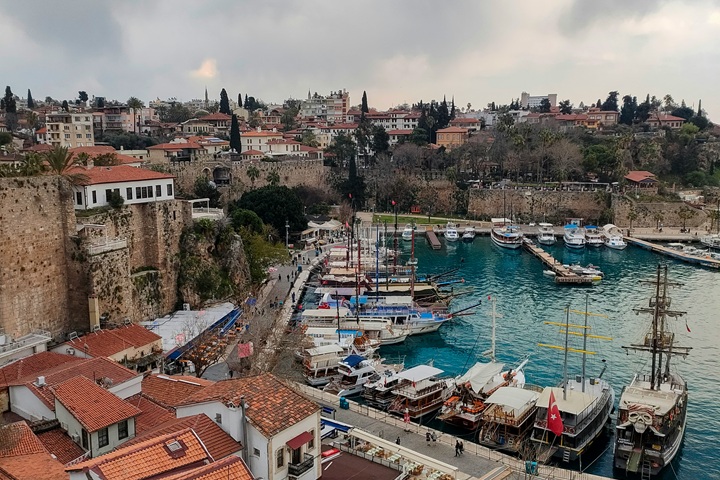
9 – 20 November 2026
Antalya (TR)
Where dialogue becomes global action
The 2026 UN Climate Change Conference (COP31) will take place from 9 to 20 November 2026 in Antalya, Turkey, under the joint COP31 presidency of COP31 with Australia. The COP is the world’s most important climate summit, bringing together representatives from politics, science, business and civil society. The conference serves as a central platform for negotiations and for promoting joint action to tackle the climate crisis.
Climate Alliance will be taking part again this year to both amplify the voices of local authorities across Europe and to support its indigenous partners from the Amazon region. The Climate Alliance delegation will organise side events on site and run the Climate Alliance stand during the first week of the conference.

Official website of the 31st United Nations Framework Convention on Climate Change

COP31 position of the Local Government and Municipal Authority (LGMA) Constituency


Climate Alliance activities
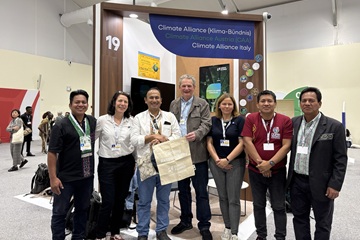
Climate Alliance Stand
9 – 14 November | Exhibition booth #19
During the first week of COP31, we showcased our network and the services we offer to our members and local authorities across Europe, as well as our collaboration with our indigenous partners, at our stand. The stand was being organised jointly by Climate Alliance Europe, Climate Alliance Austria and Climate Alliance Italy.
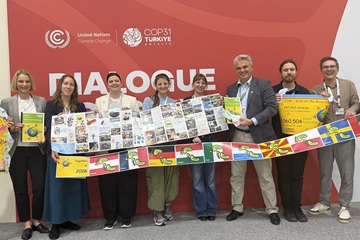
Presentation of Green Footprints campaign results
9–20 November
The Climate Alliance delegation also used the UN Climate Change Conference as an opportunity to showcase the results of the Green Footprints campaign – together with members, youth delegates and indigenous partners, as well as national and EU representatives such as Tony Agotha, Ambassador-at-Large – EU Special Representative for Climate and Energy Security – and Norbert Totschnig, Austrian Federal Minister for Agriculture and Forestry, Climate and Environmental Protection, Regions and Water Management.
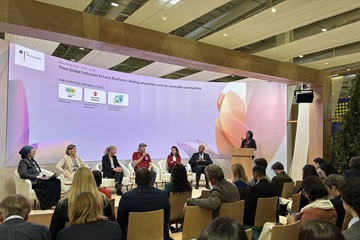
From global indicators to local resilience: Making adaptation work for most vulnerable communities
9 November, 14:30 – 15:30 | German Pavilion
Key takeaways:
- The Belém Adaptation Indicators must be informed by locally available data and the local level plays a crucial role in aggregating the data.
- Data collection processes must be inclusive and participatory, capturing the experiences of different population groups, particularly those most at risk.
- A meaningful involvement of local actors and affected communities in defining, collecting and interpreting indicators is required.

Just transition: Empowering local governments and communities
10 November, 13:15 – 14:45 | Side Event Room Pink
Key takeaways:
- Meaningful participation, cross-sectoral cooperation, local capacity and access to finance are essential to turn ambitions into action.
- The challenge lies not in developing more plans or technical solutions, but in implementing existing commitments.
- Local and regional governments must have a stronger voice in decision-making to ensure fair and tangible benefits for communities.
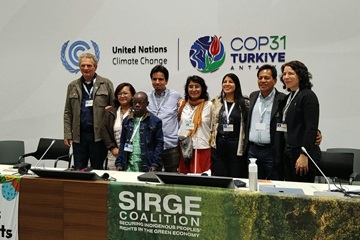
Transitioning away from fossil fuels: Indigenous peoples shaping a just transition
12 November, 15:00 – 16:30 | Side Event Room Brown
Key takeways:
- A green transition is not necessarily a just transition – “green” projects can reproduce existing patterns of exploitation.
- Structural changes to prevailing economic models, effective protection of Indigenous Peoples’ rights, and meaningful participation are required.
- Indigenous Peoples must be recognised not merely as affected communities, but as rights holders and key actors offering solutions.
Have questions? Get in touch.

Silke Lunnebach
T. +49 69 717139 -32
E. s.lunnebach@climatealliance.org