
 Get in touch




8 December 2025
Ready4Heat: New adaptation best practices available
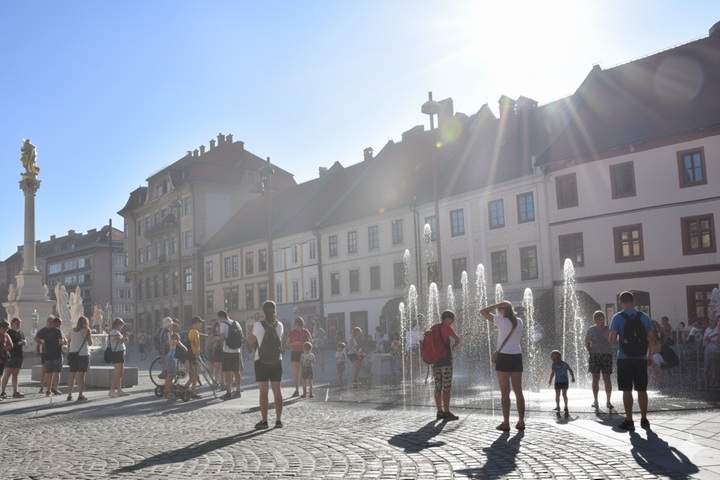
Project highlights sustainable long-term urban measures against extreme heat
Four cities in Slovenia, Austria, Germany and Hungary tested practical cooling solutions in the recent years and are now sharing their good practices and lessons learned. Maribor, Weiz, Worms and Hajduboszormeny installed green pergolas in kindergartens, built solar-powered cooling in an elderly care home, implemented shaded “green islands” in public spaces and geared up community-based heat-health networks. These four cities’ measures via the Ready4Heat project show that well-designed interventions can significantly boost resilience and protect vulnerable groups. The implemented actions and investments are affordable, replicable and easy to integrate into municipal climate adaptation plans.
What municipalities can do now:
- Use heat-maps to prioritise hotspots and match them to social spots
- Invest in fast, low-tech shade and greening
- Invest renewable energy -powered cooling in public buildings
- Build cross-department Heat & Health Action Plans
- Engage citizens and social services from day one.
In many cities across Europe, the number of heat-wave days has risen dramatically – by 10 to 15 days per decade between 1981 and 2010 in some regions. Tropical nights (when temperatures don’t drop below 20 °C) are becoming more frequent. The result: increased heat-related illness, mortality, and social inequality during hot days.
Investing in heat resilience is not just climate-policy posturing. It’s about protecting health, closing equity gaps, reducing long-term energy costs — and building cities where people can continue to live and thrive, even as summer temperatures climb. With its launch of open-source resources and the pilot implementation report, Ready4Heat gives you a solid toolkit to get started as a municipality looking into updating its adaptation plans.
The four long-term solutions implemented:
- Green “urban islands” (Hajdúböszörmény, HU): 47 “green islands” were installed at 23 public-space locations across the city — wooden benches wrapped by climbing plants plus young trees planted for future shade. The sites were selected using heat-maps and community input. Over time, these islands are expected to reduce surface and air temperatures locally and provide immediate refuge from the sun.
- Green pergolas for kindergartens (Maribor, SI): In two kindergartens, wooden pergolas were erected and covered with two species of plants (kiwi and White Isabella vine), to shade play- and rest-areas outdoors, and protect south-facing facades from overheating. This solution is low-cost, locally sourced, and doubles as a living classroom for children about plants, biodiversity and climate.
- Solar-powered cooling in elderly care facility (Weiz, AT): A more technical pilot — a solar-assisted cooling system was installed in the dining hall of a senior home. Under monitoring, the team is collecting energy consumption and efficiency data to compare against conventional cooling approaches (e.g. standard air-conditioning, district cooling). If efficient, this model could be scaled to other buildings.
- Community & stakeholder network for heat resilience (Worms, DE): Recognising that heat is not only a technical but a social and governance challenge, Worms initiated a pilot to build long-term stakeholder networks — connecting social services, urban planning, health departments, civil society and citizens. The objective: to coordinate heat protection, especially for isolated or vulnerable groups.

Have questions? Get in touch!

Eva Suba
T. +49 69 717 139 – 35
E. e.suba@climatealliance.org