
 Get in touch



10 – 21 November 2025
COP30: UN Climate Summit 2025
The COP on implementation
Following the launch of the UN climate process at the Rio Conference in 1992 and the conclusion of the negotiations on the Paris Agreement in 2015, the Brazilian government emphasised at this COP above all the need to implement decisions. To this end, multilateralism was also strengthened as an important international instrument against a political backdrop increasingly characterised by isolationism and the idea that “might is right”.
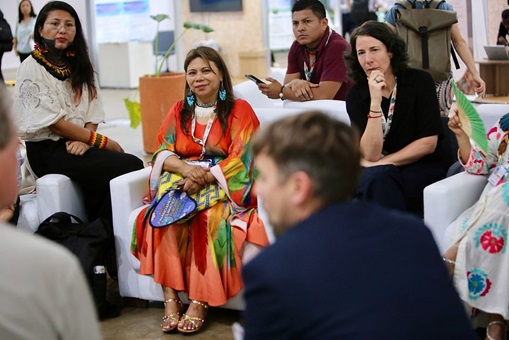
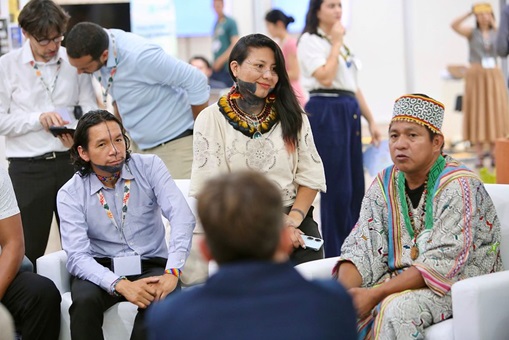
Outside the negotiating rooms, COP30 was marked by a strong presence of Brazilian and international civil society as well as indigenous representatives. Climate Alliance, which has been working closely with indigenous organisations throughout the Amazon basin for more than 35 years, took advantage of COP30 not only to raise the voices of cities and towns across Europe, but also to support our indigenous partners, strengthen our ties and plan further cooperation.
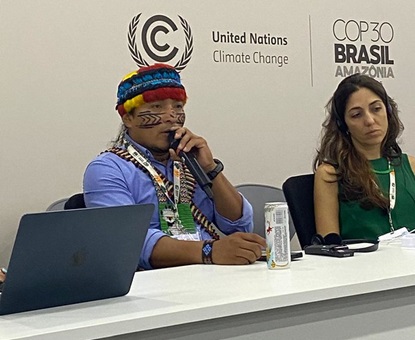
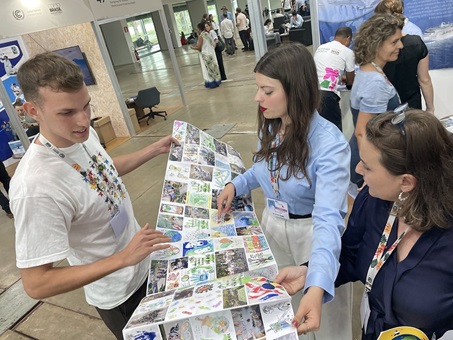
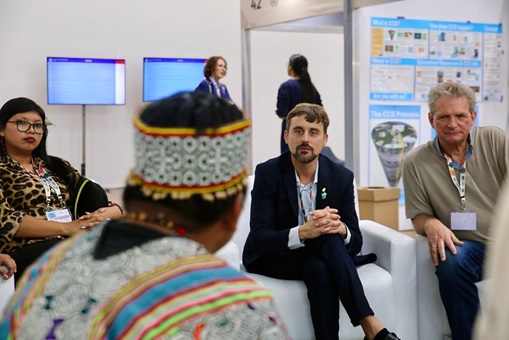
The Climate Alliance Delegation
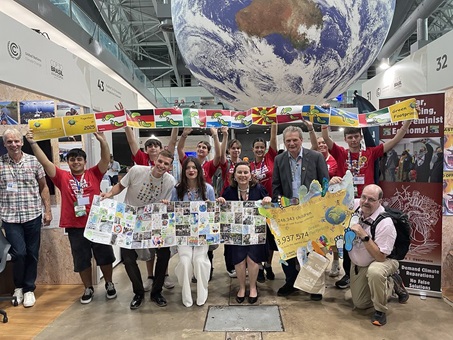
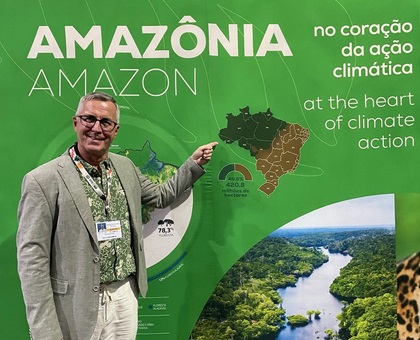
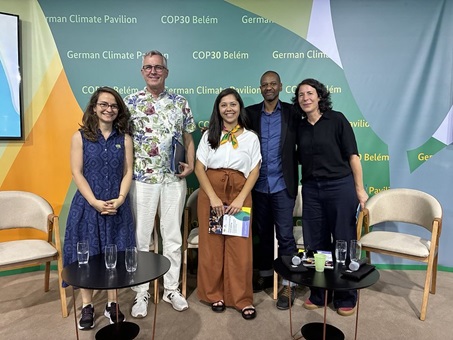
Climate Alliance Europe was represented this year by Board President Andreas Wolter of Cologne (DE) and board member Marc Serra Solé of Barcelona Province (ES) as well as Executive Director Thomas Brose and European Secretariat staff Silke Lunnebach and Andreas Kress. Climate Alliance Europe also made the participation of more than 15 indigenous and NGO representatives possible onsite from groups including the indigenous Climate Alliance member community of Sarayaku, Ecuador, the Coordinating Body of Indigenous Organisations of the Amazon Basin (COICA), the Kara Solar Foundation, and the Umweltdachverband of Austria. The network further provided a number of its members and partner organisations with online access to COP30. Special thanks to Climate Alliance Italy and Climate Alliance Austria for their support with accreditations.
Katty Gualinga
Indigenous Community of Saryaku (Ecuador)
The news said this COP would be different as it is the first being organised in Amazonia. I had high hopes that indigenous peoples would truly be able to participate but unfortunately, the conditions didn’t allow for direct indigenous participation. This is why there were protests, raising awareness about how companies are exploiting indigenous territories. It’s just regrettable at this stage, after all the COPs that have been organised, that the trampling of human rights in indigenous territories continues. But there is also hope since the indigenous movement is more unified than ever to protect what remains of Amazonia.

Alexandra Kandzi
Weserbergland Municipal Climate Protection Company (DE)
The variety of scientists, initiatives, and NGOs presenting their projects and solutions impressed me. There are so many ideas and possibilities, so much positivity and commitment to saving the climate and biodiversity. Yet I got the impression that these people are often quite desperate – they know how powerful their solutions are but fear they will once again be ignored and that the big polluters will simply continue to do their own thing regardless of the consequences. Belém left me questioning how we can redress this imbalance of power. It was nonetheless quite special to be able to participate in COP events – something everyone should experience at least once.
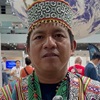
Miguel Guimares Vasquez
AIDESEP (Peru)
As in COPs past, we’re asking for direct access to funding to help protect our territories, where we are faced with multiple challenges such as illegal mining, the expansion of monocultures, palm oil plantations, and above all narcotrafficking that dispossesses indigenous communities of their territories while generating great social and environmental impacts. It is important that indigenous peoples stand together at COP30, reaffirming our commitment to continue working on the agenda that unites us. Although our efforts are often not appreciated, we are doing important work – day after day – to slow the climate crisis.
Climate Alliance at COP30
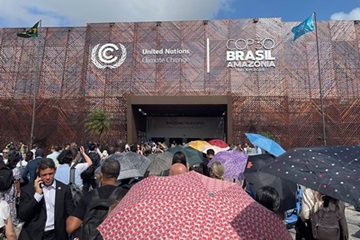
The Climate Alliance stand
10 – 15 November | Exhibition space #47
During the first week of event, COP30 participants came to visit us at our stand, where we presented our network, municipal climate action throughout Europe and our partnership with indigenous peoples throughout Amazonia towards climate justice!
The stand was organised in cooperation with Climate Alliance Austria and Climate Alliance Italy.
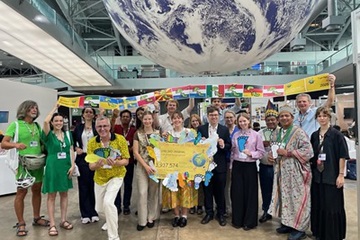
Green Footprint campaign preliminary presentation
11 November at 14:00 | Blue zone
Every year, Climate Alliance’s awareness-raising campaign for kindergarten and school children finishes off at the UN Climate Summit with the presentation of all the footprints collected by kids across Europe in the name of climate protection and sustainability. This year, the children’s efforts and hopes were presented twice. This preliminary presentation in the run up to the final presentation with UNFCCC Deputy Executive Secretary, Noura Hamladji, featured Climate Alliance President Andreas Wolter and youth delegates.
 Photo impressions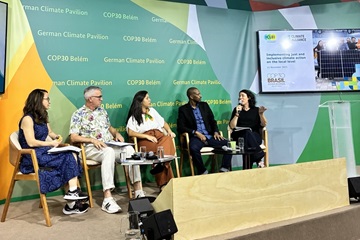
Implementing just and inclusive climate action on the local level
11 November from 16:30 to 17:30 | German Pavilion
Local governments play a pivotal role in ensuring climate action is both effective and fair and municipal programmes must balance emission reductions with social inclusion to avoid deepening inequalities or losing public support. This session explored how cities are anchoring climate action in community needs and which national and international frameworks are needed to support just and inclusive local climate policies.
This side event was made possible in cooperation with ICLEI.
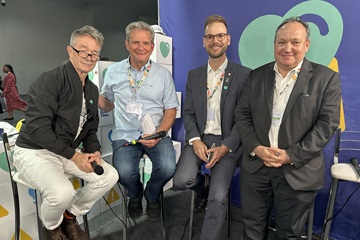
We Don’t Have Time Climate Hub Day 1 – The First Fuel: From Energy Pledges to Efficient Action
11 November from 16:30 to 17:15 (20:30 to 21:15 CET) | online
Throughout COP30, the We Don’t Have Time platform ran a series of broadcasts via their Climate Hub. Climate Alliance’s Executive Director, Thomas Brose, was among those featured on this first episode of Energy Efficiency First – a series on how EU leaders, cities, and innovators are showing the way to a more energy-efficient future, how to collaborate on climate, and how to seize the opportunities as we transition to net zero.
The broadcasts were commissioned by the EU’s Directorate General of Energy (DG ENER).
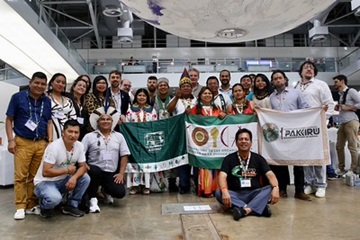
The Central Role of Indigenous Peoples and Local Communities in Just Energy Transitions
13 November from 16:45 to 18:15 | Room 5
In this official side event, representatives of indigenous and other communities will share their experiences confronting extractive frontiers and low-carbon technologies. They shared their perspectives on addressing false solutions and promoting just climate initiatives to drive a community-led energy transition rooted in deep relationships to land and ecosystems.
This side event was made possible in cooperation with American Anthropological Association, Climate Alliance Austria, Climate Alliance Italy, German Institute of Development and Sustainability, Institute of Development Studies and INFOE.
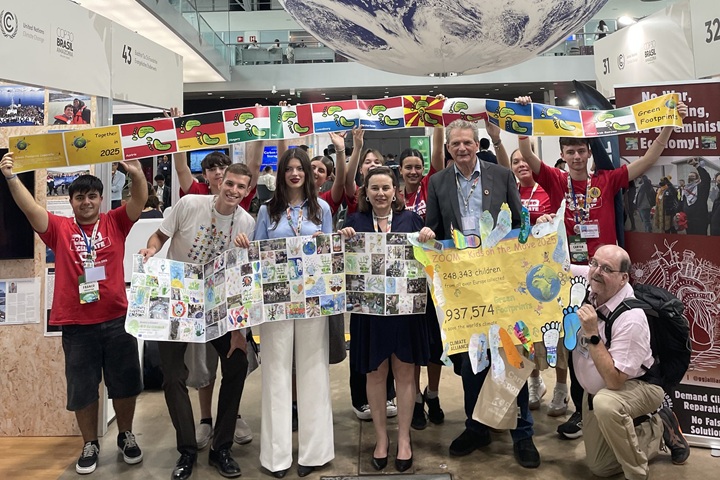
Green Footprint campaign finale
17 November at 14:00 | Blue zone
This final presentation of Climate Alliance’s Green Footprint campaign marks the highpoint of this awareness-raising campaign for kindergarten and school children. Here, the efforts of kids from across Europe were handed over symbolically to UNFCCC Deputy Executive Secretary, Noura Hamladji.
Press release
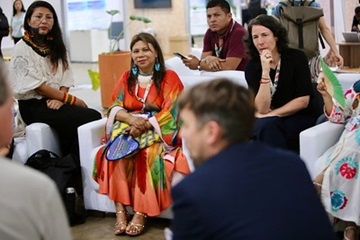
The Amazon Is Not for Sale: Funding Indigenous-Led Protection as an Alternative to Green Colonialism
19 November from 18:30 to 20:00 | Room 8
While indigenous peoples lack access to climate finance, REDD+ and carbon markets are being promoted without their free, prior, and informed consent as dictated by the UN’s own Declaration on the Rights of Indigenous Peoples. This side event exposed green colonialism, instead championing indigenous-led protections and non-market finance.
This side event was made possible in cooperation with Planète Amazone, Action Solidarité Tiers Monde (ASTM/Climate Alliance Luxembourg) and Global Justice Ecology Project.
Have questions about COP30? Get in touch!
Silke Lunnebach
T. +49 69 717139 -32
E. s.lunnebach@climatealliance.org