
 Get in touch




Towards a Just and Climate Neutral Mobility
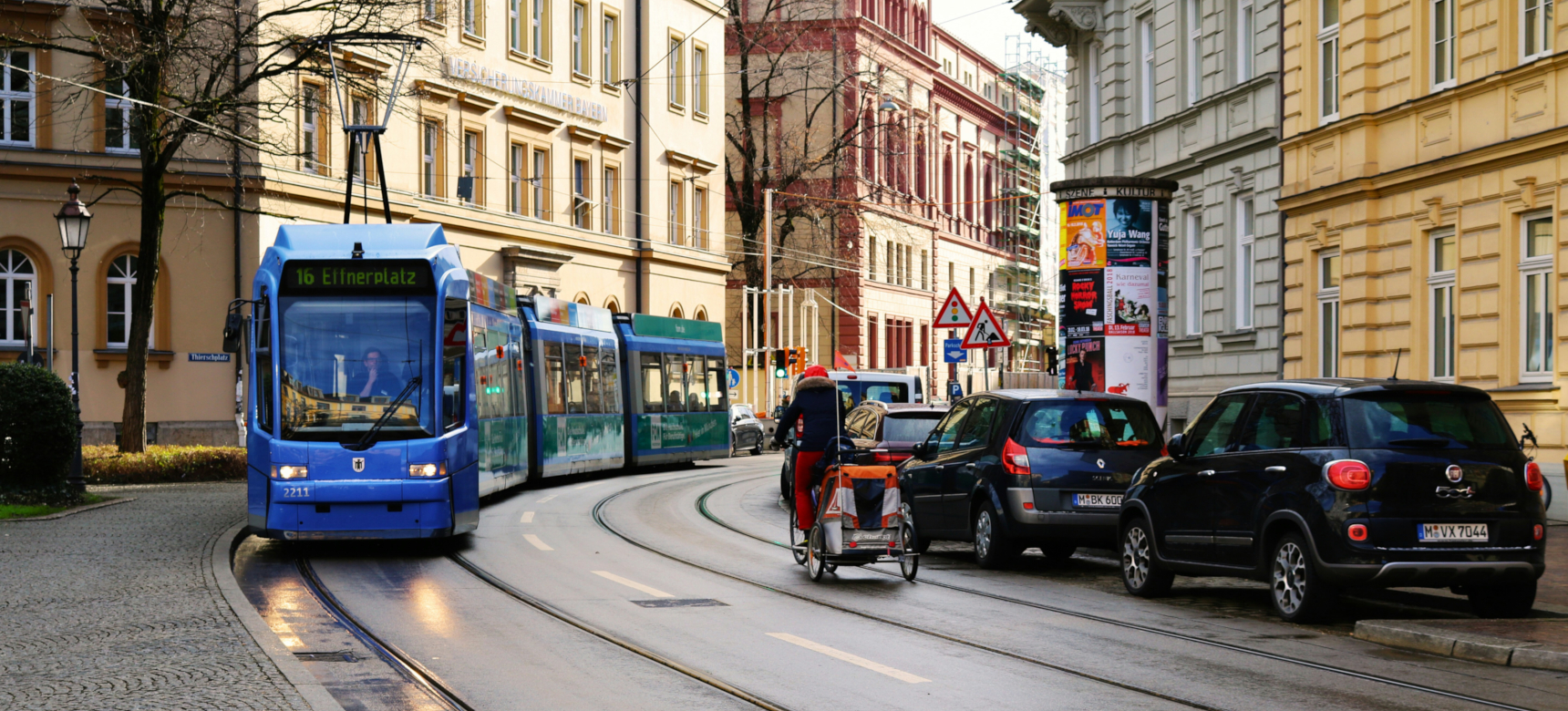
Closing gaps to help Social Climate Plans tackle transport poverty

Towards a Just and Climate Neutral Mobility will help national and local actors to improve their understanding of transport poverty and take measures to combat it.
The European Union prioritises the principle of “leaving no one behind” in the green transition. Within this framework, transport poverty has been recognised as a major social barrier under the Social Climate Fund (SCF). Transport poverty refers to the inability to afford or access transport needed for essential services such as work, education, healthcare, and social participation. To address this challenge, EU Member States are developing national Social Climate Plans, which aim to ensure that climate policies are socially fair and inclusive.
Despite its growing importance at EU level, transport poverty remains largely absent from national and local policy documents in Croatia, Hungary, Serbia, and Germany. This gap persists even though transport poverty is closely linked to social equity, climate action and sustainable and low-emission mobility. The lack of shared definitions, data, and institutional capacity makes it difficult for policymakers and local authorities to design effective and inclusive mobility solutions.
Towards a Just and Climate Neutral Mobility aims to address this gap by improving understanding of transport poverty, its causes, and its consequences through knowledge, data analysis and local-level engagement in Croatia, Hungary, Serbia and Germany. The project will support national and local stakeholders and policy makers by providing knowledge, tools, and practical solutions needed to develop inclusive, climate-neutral mobility systems that work for everyone, especially vulnerable groups.
Main objectives:
- Establish a solid evidence-base on transport poverty
- Strengthen institutional capacity and knowledge
- Engage national and local stakeholders and empower vulnerable groups
- Identify and promote good practices and solutions
- Stimulate local innovation through Climathons
- Support implementation of Social Climate Plans
- Promote EU-wide learning and policy uptake.
Key activities include:
- Developing national definitions and indicators for transport poverty
- Conducting surveys and diagnosis reports to build an evidence base
- Strengthening public institutions through capacity-building and co-creation workshops
- Implementing pilot projects to test practical solutions
- Organising Climathon events to stimulate innovative, low-emission mobility ideas.
Countries involved: Croatia, Germany, Hungary, Serbia
Project information
Towards a Just and Climate Neutral Mobility
Project funding period: December 2025 – February 2028
Funded by: This project is part of the European Climate Initiative (EUKI) of the German Federal Ministry for the Environment, Climate Action, Nature Conservation and Nuclear Safety (BMUKN).
Partners

Climate Alliance
Project Coordinator | European level
For over 30 years, Climate Alliance member municipalities have been acting in partnership with indigenous rainforest peoples for the benefit of the global climate. With some 2,000 members spread across more than 25 countries, Climate Alliance is Europe’s largest city network dedicated to comprehensive and equitable climate action.
 Learn more
Oeko-Institut
Germany
Oeko-Institut is a leading independent European research and consultancy institute working for a sustainable future. Founded in 1977, the institute develops principles and strategies for realising the vision of sustainable development globally, nationally and locally. Oeko-Institut employs about 220 staff, including 150 researchers at three locations in Germany – Freiburg, Darmstadt and Berlin. Every year, they work on more than 500 national and international projects in the following areas: Energy Transition and Climate Policy, Digitalisation, Land-use Transition, Green Transition of the Mobility Sector, Resources Transition, Sustainable Production and Consumption, Nuclear Technology, Environmental Law and Just Transition.

DOOR
Croatia
DOOR (Society for Sustainable Development Design) is a civil society organization founded in 2003. DOOR’s mission is the promotion of sustainable development principles in all segments of society, at the local, regional and national levels, primarily in the field of energy.
REFLEX Environmental Association
Hungary
REFLEX Environmental Association founded in 1987 is a Hungarian NGO. Our main base and advisory office are located in Győr, while our Ecological Centre is situated in Pápteszér, in the beautiful natural surroundings at the foot of the Bakony Mountains. REFLEX’s work focuses mainly on climate protection, climate change adaptation/mitigation support, nature based solutions, renewable energy, energy efficiency and energy poverty issues, circular economy and related awareness raising. REFLEX has a wide range of working relationships with municipalities, institutions, citizens, schools and NGOs and it has been involved in several national and EU-funded projects over the past decades.
RES Foundation
Serbia
RES Foundation collects, analyses and distributes knowledge for evidence-based policy making in energy and climate change, primarily in Serbia, the Western Balkans and Southeast Europe.
We understand air pollution, energy poverty and the ongoing climate emergency as symptoms of underlying conditions of fossil fuels dependency, inefficient production, distribution and use of energy.
We work towards engaging, facilitating and leading partners from central and local governments, business and civil society towards a swift and just energy transition to renewables and energy efficiency in such ways so as to ensure no one is left behind without a ticket to our shared European, climate-neutral future.
Want to learn more? Get in touch!

Dr. Kristina Eisfeld
T. +49 30 240 882 77
E. k.eisfeld@climatealliance.org