
 Get in touch





Budapest, Hungary
Accelerating the Energy Transition in Budapest
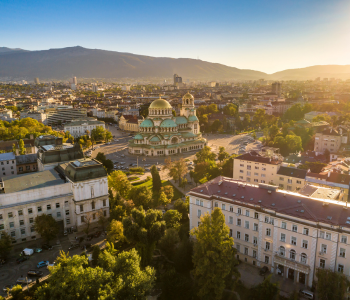
Budapest District II at a Glance
📍 Location: Budapest District II, Hungary
👥 Population: 86,567
🏙️ Setting: Mixed urban and suburban district on the Buda side of Budapest
⚡ Existing Energy Communities in Hungary: 8 registered ECs
🏢 ECOss host: Municipality of Budapest District II
🎯 Pilot focus: Establishing a permanent support structure and relaunching a local Energy Community
.
Budapest District II is one of the 23 districts of Hungary’s capital. Located on the hilly Buda side, the district combines urban and suburban areas and is home to around 86,600 residents.
.
The LIFE-ECOss pilot builds on previous efforts by the Municipality of Budapest District II to establish a local Energy Community. Through the preparation of the Pesthidegkút Energy Community (PEK), the municipality gained valuable experience in working with citizens and local organisations. Although the initiative was ultimately stalled by regulatory barriers, the process demonstrated strong local interest and helped establish partnerships with organisations such as Friends of the Earth Hungary, Climate Alliance Hungary and the Zero Carbon Centre.
.
LIFE-ECOss builds on this foundation to establish a permanent institutional structure that can support citizens and local stakeholders in developing Energy Communities.
Local Energy Context
Energy Communities are still at an early stage in Hungary. Although a legal framework for Renewable Energy Communities and Citizen Energy Communities exists, practical implementation remains limited.
.
Currently, only eight Energy Communities are registered in Hungary: Bábolna, Pannon, KESZ – Community Energy Service Provider, First Hungarian Innovative, Kistelek, Tiszamente, Cigánd and PVN.
.
Hungary’s 2007 Electricity Act provides the legal basis for Energy Communities. They must operate as non-profit cooperatives or companies and focus on environmental, social or economic benefits for their members and the local area rather than financial profit. Energy Communities must register with the Hungarian Energy and Public Utility Regulatory Authority (MEKH) and can undertake activities such as electricity generation, storage and sharing.
.
Despite this legal foundation, the practical development of Energy Communities remains slow.
Key Challenges for Energy Communities

⚖️ Political & legal barriers
Hungary’s centralised energy policy, changing support schemes and fragmented legal framework create uncertainty for citizen-led energy initiatives. Rules around collective self-consumption remain unclear, while licensing and permitting procedures can create a significant administrative burden for small community projects.
💶 Financial barriers
Dedicated financial instruments for Energy Communities remain limited. Community-level loans and other tailored financing options are scarce, while administrative costs can be disproportionately high compared with the size of community investments.
👥 Low awareness & limited trust
Public awareness of Energy Communities remains low. Fragile trust in institutions can also make citizens hesitant to enter into long-term collective commitments.
⚡ Technical & grid barriers
Grid connection procedures can be complex and costly. Hungary is also still developing the smart metering and digital infrastructure needed to support more flexible and community-based energy systems.
Current State
Lessons from the Pesthidegkút Energy Community
The Municipality of Budapest District II has already taken steps towards establishing a local Energy Community through the Pesthidegkút Energy Community (PEK).
Although the initiative was ultimately stalled by regulatory barriers, the preparatory process demonstrated that there is strong interest among local residents in community energy. It also enabled the municipality to establish strategic partnerships with local expert organisations.
These experiences provide an important starting point for LIFE-ECOss. Rather than starting from scratch, the Budapest pilot will build on the knowledge, relationships and lessons developed through the PEK initiative.
The Budapest ECOss Hub
The LIFE-ECOss pilot will establish a permanent ECOss hub within the Municipality of Budapest District II.
The hub will function as a local support structure for citizens and other stakeholders interested in Energy Communities. It will combine information, personalised advice, capacity building and community engagement.
What will the ECOss Hub do?
ℹ️ Information centre
The ECOss will provide accessible information on the legal, financial and technical aspects of Energy Communities, helping citizens and local stakeholders navigate a complex framework.
🤝 Advisory & facilitation service
Citizens and emerging Energy Communities will receive tailored, one-to-one support and step-by-step guidance throughout the development of their projects.
🎓 Capacity-building platform
The hub will organise workshops, training sessions and co-creation activities for municipal staff, citizens, local businesses and other stakeholders.
💻 Digital One-Stop-Shop
A localised Hungarian version of the LIFE-ECOss digital platform will complement the physical hub and provide an accessible online knowledge and support centre.
👥 Citizen engagement & co-creation
Building on the experience of PEK, the ECOss will create permanent opportunities for citizen participation, awareness raising and community co-creation.
⚡ Support the relaunch of a local Energy Community
A central function of the hub will be to provide hands-on support for relaunching an Energy Community in District II. The process will build on lessons from PEK and experiences from existing Hungarian Energy Communities.
Pilot Development
Detailed activities, milestones and implementation stages will be added as the pilot develops.
Hungarian Partners & Stakeholders

Municipality of Budapest District II
The Municipality of Budapest District II is the host of the Hungarian LIFE-ECOss pilot. With a strong commitment to sustainable urban development and citizen engagement, the municipality provides the institutional framework and local legitimacy for the ECOss. It will work with project partners and local stakeholders to co-design and establish a support structure adapted to the Hungarian legal and social context.
 Website

Fenntartható Közösségek Központja (FKK)
FKK is a Hungarian association dedicated to fostering sustainable communities and cooperation between local governments. With a network of 26 municipalities, it plays a key role in adapting and disseminating the LIFE-ECOss approach in Hungary. FKK will work closely with the Budapest pilot and lead national replication, supporting municipalities in adopting the ECOss model and training approach.